
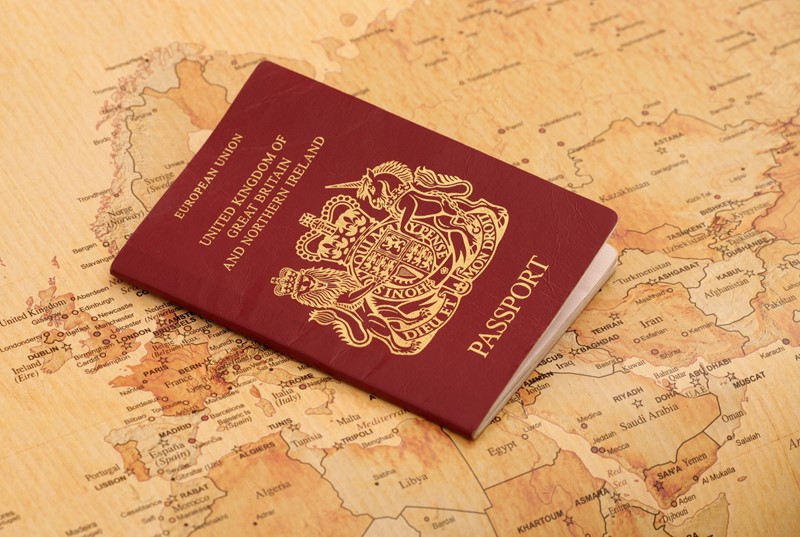
You might have read this story of a passport application of a child being refused over ‘copyright infringement’. The refusal occurred when the parents applied for a passport for their seven-year-old son named Loki Skywalker Mowbray. His name is actually legally registered on his birth certificate, but the Home Office refused to issue a passport over potential copyright infringements. Interestingly, after the media became involved, the Home Office agreed to issue the passport. But can the Home Office refuse for copyright infringement reasons? The short answer is yes.
According to the guidance it is “unlikely that a customer will use a name in a passport to advertise goods or services” but that passports will not be issued in such a name without the consent of the trademark or copyright owner. The reasoning is that “because British passports are the property of the Crown and allowing a name that breaches trademark or copyright laws, may damage its reputation.” Before any refusal, the caseworkers will have to discuss the refusal with their line manager and then refer to a Higher Executive Officer who will make the final decision.
Names in breach of copyright or trademark laws are not the only reason why a passport application can be refused by the Home Office. The two other reasons are that the name causes public offence or because the name contains numbers or symbols which cause technical issues.
The rule is quite clear that a name which may cause public outrage in a community or promote unlawful activity cannot be used on a British passport. Some examples of names which may cause offence are swear words or vulgar and offensive language, inappropriate religious or sexually explicit references, and references that may be deemed slanderous to others. Names that can promote unlawful activity include names associated with criminal gangs or extremist organisations, words promoting racial or religious hatred, or those which might incite crime or anti-social behaviour. If someone is changing their name to hide a crime or the fact that they are on the sex offenders register, this might also give grounds for refusal. The Home Office will assess both the words used and the phonetic sound of the name. Because there is no set list of names, the same process as for trademark or copyright infringement applies.
Finally, passports must meet the International Civil Aviation Organisation (ICAO) standards which do not allow for numbers, symbols, or punctuation marks, except for hyphens or apostrophes, diacritical characters, or accent marks or if the name contains too many characters. The guidance makes it clear that if the person has a number in their name and it is recognised on their birth certificate or change of name documents, the passport can still be issued but the number will be spelled out. For instance, ‘Thomas 7 Jones’ will become ‘Thomas Seven Jones’ and ‘Mary Sm1th’ will become ‘Mary Smoneth’. Names with apostrophes are acceptable although these can create problems in the system.
The system does not accept diacritical characters (e.g., a mark, point, or sign added to a letter) or accent marks. A passport issued before April 1, 2024, may however include diacritical characters or accent marks. However, for newer passports, the caseworker will take steps to update the customer’s name with an alternative spelling, as approved by the ICAO in the published transliteration table.
For any names longer than 30 characters, including both the surname and forenames, passports can still be issued, but with a shortened version of the name or initials for middle names. The applicant must put their preferred shortened name on the application form. Similarly, if the person has too many names, the person will have to decide how they want to appear including the first forename and as many other forenames as can be fitted onto the passport.
It is always good to check the guidance before submitting any application to avoid the stress of a potential refusal, especially for the last situation discussed. Passports can also be cancelled for non-payment of child maintenance. Further guidance can be found on the HM Passport Office page (https://www.gov.uk/government/collections/ips-passports-policy).